


¿El jacuzzi al aire libre tiene algún requisito en cuanto a la calidad del agua?
2025-01-25 15:30The outdoor spa jacuzzi not only provides people with the function of relaxing and relieving stress, but also becomes an important place for family entertainment, socializing and leisure. However, in order to ensure that the experience of using the spa bathtub is both comfortable and safe, the management and maintenance of water quality are particularly important. Many users often ignore the impact of water quality on the spa effect and equipment life when using the spa bathtub. In fact, the outdoor spa jacuzzi has strict requirements for water quality. The quality of water is not only related to human health, but also directly affects the use effect of the spa bathtub and the life of the equipment.
This article will explore the requirements of outdoor spa jacuzzi for water quality, analyze in detail the problems that may arise when the water quality is unqualified, and provide professional suggestions for water quality management and maintenance to help users ensure the best use experience of the spa bathtub.
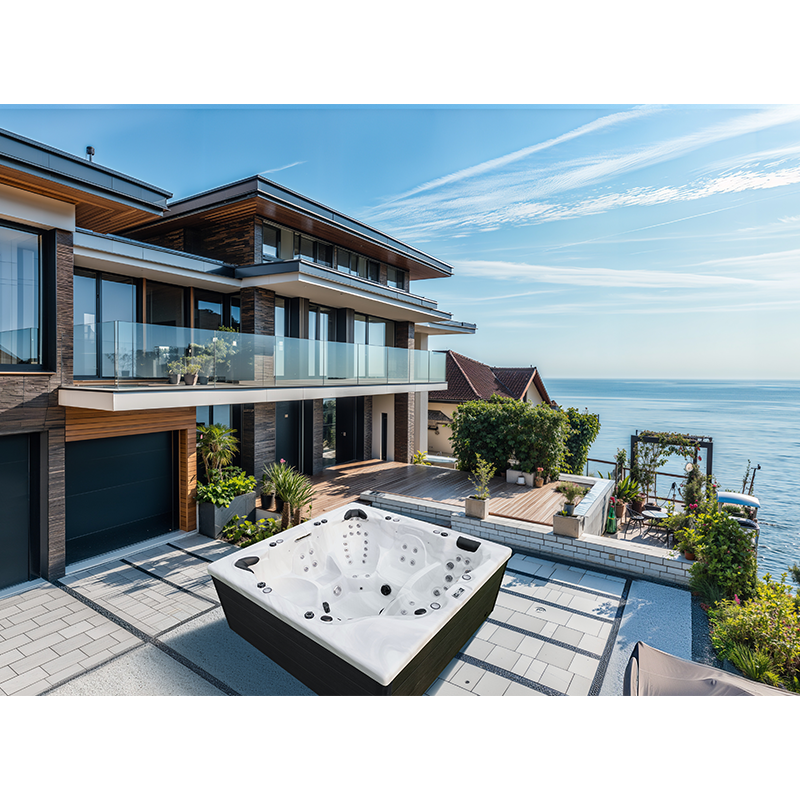
Does the outdoor spa jacuzzi have any requirements for water quality?
Due to the special design of its water circulation and water flow system, the outdoor spa jacuzzi has stricter requirements on water quality than ordinary bathtubs. The requirements for water quality are analyzed mainly from the following aspects:
1. Cleanliness of water
The water flow of the spa bathtub needs to be kept clean to ensure the comfort and health of the user. If impurities, dirt and microorganisms in the water are not cleaned in time, the water quality may deteriorate, affecting the user experience and even causing health problems.
● Sources of water pollution: The sources of water pollution usually include sweat, sebum, cosmetic residues, body hair, dust and fallen leaves in the external environment, and bacteria in the air.
● Risk of dirt accumulation: If these pollutants accumulate in the water for a long time, they will not only make the water turbid, but also breed bacteria and algae, causing the water to stink, and even become the source of health hazards such as skin allergies and infections.
2. Chemical composition of water
In addition to the cleanliness of water, the chemical composition of water is also a key factor in the management of spa water quality. Chemical substances in water directly affect the normal operation of the spa bathtub and the health of users. Common chemical components that need to be paid attention to include:
● pH value: The pH value of water is an indicator of the acidity and alkalinity of water. The ideal pH value of spa water should be maintained between 7.2 and 7.8. Too low a pH value will make the water acidic, which may corrode spa equipment and irritate the skin and eyes; while too high a pH value may cause scale formation, reducing the efficiency of spa equipment.
● Hardness: The hardness of water is determined by the calcium and magnesium ion content in the water. When the water hardness is too high, it will cause scale formation, which will not only reduce the heating efficiency of the spa, but also cause clogging and damage to the equipment. Therefore, soft water treatment is particularly important in spas.
● Chlorine content: Many spas use chlorine or other disinfectants to kill bacteria and microorganisms in the water. The right amount of chlorine can effectively keep the water clean and prevent bacterial growth. However, too high a chlorine content may cause the water to become more irritating, causing dry skin and discomfort; too low a chlorine content will not achieve effective disinfection, which may cause bacterial growth and poor water quality.
3. Water circulation and filtration
The water circulation system of a spa is the core of its water quality maintenance. Water circulates through a water pump system to different nozzles and filters, and returns to the bathtub after cleaning. The continuous circulation of water can effectively remove impurities in the water and keep the water clean.
● The role of the circulation system: The continuous circulation of water not only helps to remove suspended matter and impurities in the water, but also enhances the stability of the water quality and prevents the water quality from deteriorating due to stagnation. Reasonable water circulation can prevent the growth of bacteria, algae and other microorganisms in the water body.
● The role of the filtration system: The filtration system of the spa bathtub removes impurities and bacteria in the water through filters. A high-quality filtration system can effectively filter out fine particles, skin oils and other pollutants to maintain the cleanliness and transparency of the water.
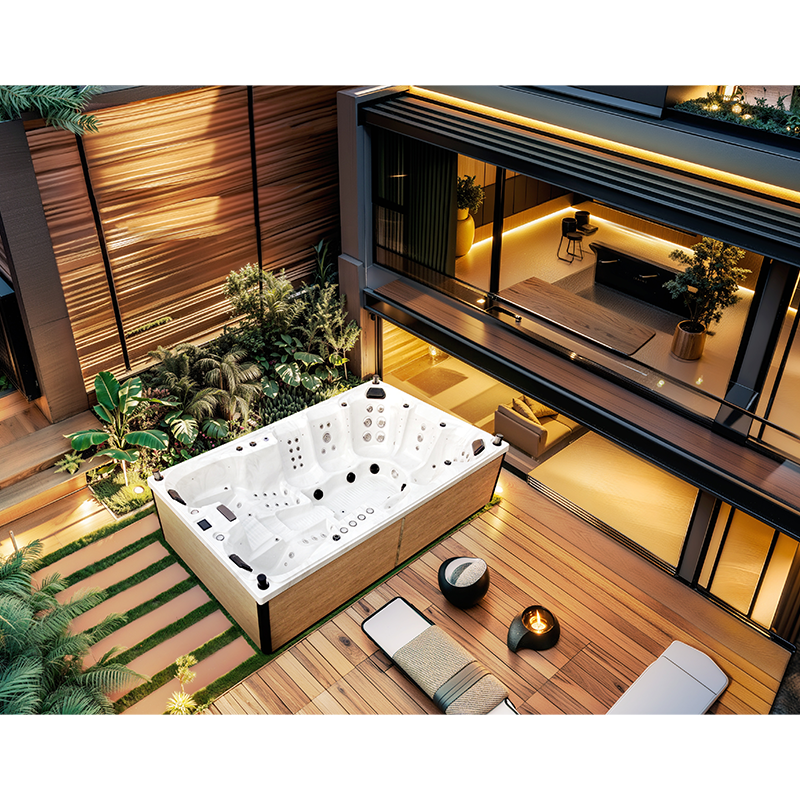
What impact does unqualified water quality have on the spa bathtub?
Unqualified water quality not only affects the user's experience, but may also cause long-term damage to the spa bathtub itself. The following are some of the problems that unqualified water quality may cause:
1. Health risks
Unclean water may become a breeding ground for bacteria and microorganisms. Long-term use of a spa bathtub with unqualified water quality may bring the following health risks:
● Skin infection: Bacteria and viruses in the water may cause skin allergies, acne or skin infections. Certain sensitive groups (such as children, the elderly or people with weakened immune systems) are more susceptible.
● Eye discomfort: Chemical components in the water, such as high chlorine content, may also cause eye irritation and discomfort.
● Respiratory problems: Chemicals and bacteria in the water evaporate into the air, which may affect respiratory health, especially for users with asthma or other respiratory diseases.
2. Equipment damage
Poor water quality can also cause damage to the equipment of the spa and shorten its service life. Here are some possible problems:
● Scale accumulation: Hard water or unstable pH value can cause scale accumulation, especially in the heating system and nozzle system. Scale not only affects the spa effect, but may also cause the heating system to become less efficient and even damage the heating element.
● Problema de corrosión: Las sustancias ácidas en el agua (como un valor de pH bajo) pueden corroer las partes metálicas del spa (como bombas de agua, tuberías y boquillas, etc.), lo que puede provocar fallas en el equipo en casos graves.
● Problema de bloqueo: Pequeñas impurezas, grasa y residuos químicos en el agua pueden bloquear el sistema de filtración o las tuberías, lo que resulta en un flujo de agua deficiente e incluso causa fallas en el sistema de bombeo.
3. Mala experiencia de usuario
Los problemas de calidad del agua afectan directamente la experiencia del usuario. El agua turbia, el mal olor o la irritación de la piel pueden reducir considerablemente la comodidad de la experiencia en el spa. Cuando los usuarios utilizan unbañera de hidromasajeEn un entorno con mala calidad de agua, pueden experimentar las siguientes molestias:
● Agua turbia: la materia suspendida en el agua puede hacer que el agua se vuelva turbia, lo que afecta la transparencia de la bañera de hidromasaje y reduce en gran medida la experiencia del usuario.
● Agua con mal olor: Las bacterias y la materia orgánica que crecen en el agua pueden provocar que esta huela mal, provocando una gran incomodidad a los usuarios.
● Alergias o irritación de la piel: El agua sucia puede irritar la piel y provocar síntomas como reacciones alérgicas, sequedad o picazón.
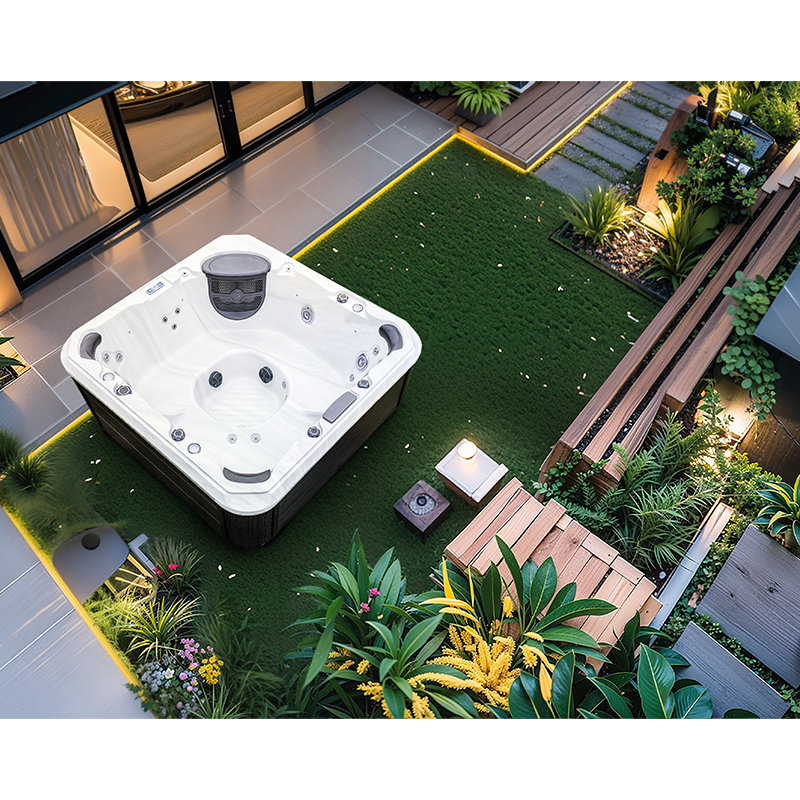
¿Cómo mantener la calidad del agua de una bañera de masaje de spa al aire libre?
Para garantizar la buena calidad del agua del spa, los usuarios deben supervisarla y mantenerla regularmente. A continuación, se presentan algunas medidas importantes para la gestión de la calidad del agua:
1. Pruebe periódicamente la calidad del agua
Revisar regularmente la calidad del agua es fundamental para mantenerla limpia en el spa. Utilice herramientas especiales para medir la calidad del agua (como papel de prueba de pH, reactivo de cloro, etc.) para comprobar el valor de pH, la dureza y el contenido de cloro del agua y garantizar que se encuentre dentro de un rango seguro. Según los resultados, ajuste la calidad del agua a tiempo para mantenerla estable.
2. Cambia el agua regularmente
Aunque el sistema de circulación y filtración del spa puede purificar el agua, los contaminantes se acumularán con el uso. Se recomienda cambiar el agua regularmente, generalmente cada 3 a 6 meses, para garantizar su frescura y limpieza.
3. Utilice agentes de tratamiento de agua
Para mantener la calidad del agua limpia y estable, los usuarios pueden utilizar agentes de tratamiento de agua como tabletas de cloro, eliminadores de cloramina, ajustadores de pH, etc. Al utilizar estos productos químicos, deben usarse estrictamente de acuerdo con las instrucciones del producto para evitar un uso excesivo que pueda causar un desequilibrio en la calidad del agua.
4. Limpiar el sistema de filtración
El sistema de filtración del spa debe limpiarse regularmente para eliminar las impurezas acumuladas. Revise y limpie el filtro regularmente para garantizar su correcto funcionamiento y evitar un flujo de agua deficiente y el deterioro de la calidad del agua debido a la obstrucción del elemento filtrante.
5. Mantenga la bañera limpia
Además del tratamiento del agua, la pared interior, la boquilla y otras piezas del spa que entran en contacto con el agua también deben limpiarse regularmente. Esto elimina la grasa, la suciedad y las bacterias, ayudando a mantener la calidad del agua y a prevenir su contaminación.

Lovia Spa redefine el bienestar al aire libre con sus lujosos productos de spa de bajo consumo. Desde jacuzzis de madera hasta spas de natación acrílicos, nuestra gama está diseñada para la vida moderna y el éxito empresarial. Con el respaldo de certificaciones como CE y ROHS, garantizamos seguridad y calidad. Compre al por mayor para acceder a nuestros precios con descuento y ofertas exclusivas de temporada.