


¿Cómo purgar el aire de las tuberías de una bañera de hidromasaje al aire libre?
2025-03-24 15:30During the maintenance of an outdoor spa bathtub, exhausting the air in the pipes is an important step. The air in the pipes may affect the water flow effect of the spa bathtub, and then affect the normal operation of the water circulation system. If not handled in time, the air trapped in the pipes may also cause a series of problems such as pump idling and reduced heating efficiency, which not only affects the user experience, but also may damage the mechanical system of the outdoor spa bathtub.
The following will discuss in detail the reasons for air entrapment in the pipes of the outdoor spa bathtub, how to determine whether there is air, and the specific exhaust operation methods to help users better maintain the normal operation of the outdoor spa bathtub.
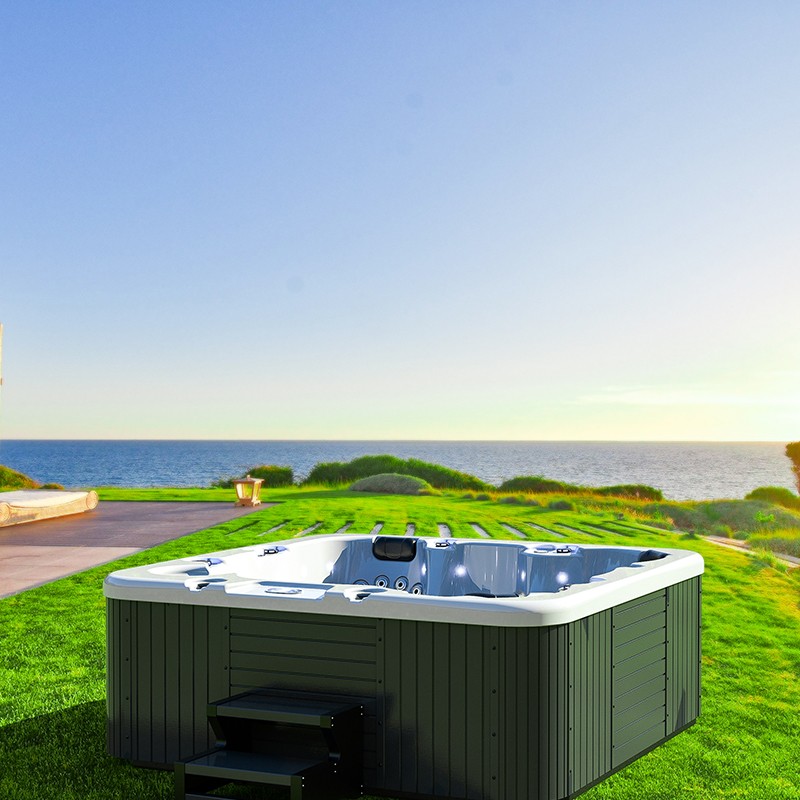
What are the reasons for air entrapment in the pipes of the outdoor spa bathtub?
There are many reasons for air to enter the pipe system of the outdoor spa bathtub, mainly including the following aspects:
1. The water level is too low
When the water level of the outdoor spa bathtub is low, air is more easily sucked into the pipe from the water surface. This situation is common in spa bathtubs that have not been used for a long time or the water level has not been replenished in time.
2. Residual bubbles after cleaning or replacing the filter
After each cleaning or filter replacement, air is often generated in the outdoor spa bathtub filtration system, and some of the air may enter the pipe. Failure to exhaust air in time will cause poor water flow and affect the normal operation of the water circulation system.
3. Air inhalation during water pump operation
When the outdoor spa bathtub water pump is started without being filled with water, air may be sucked into the pump chamber and pipe, thereby affecting the working efficiency of the water pump, and in severe cases, causing damage to the water pump.
4. Residual air after drainage or maintenance
After each drainage cleaning or regular maintenance, air often remains in the spa bathtub pipe. If it is not discharged in time, it will affect the smoothness of water flow.
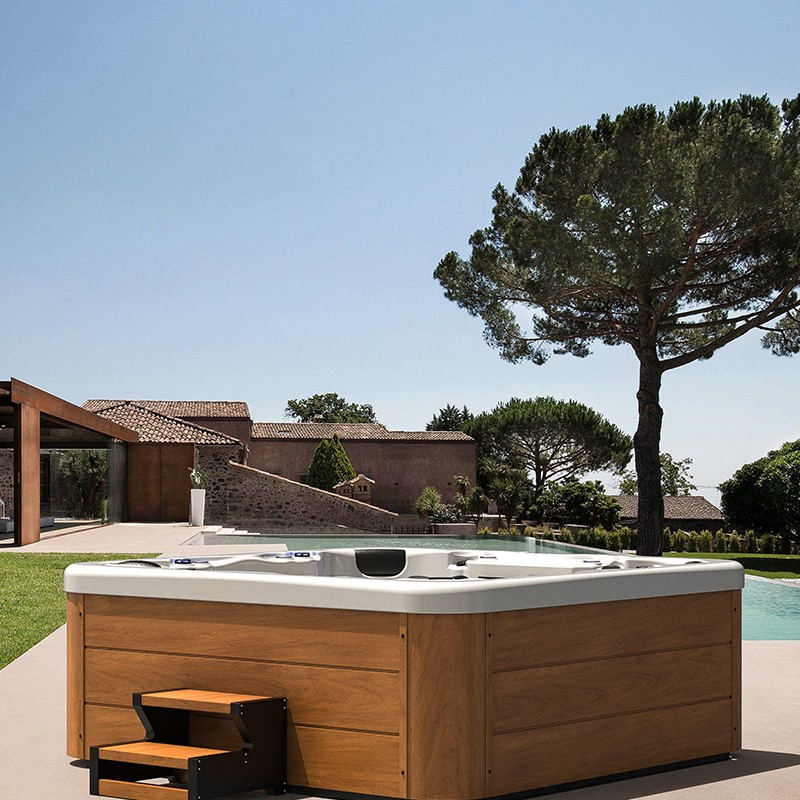
How to determine whether there is air in the outdoor spa bathtub pipe?
Before performing the exhaust operation, first confirm whether there is air in the outdoor spa bathtub pipe. Here are several ways to judge:
1. Observe the water flow
Poor water flow is one of the common manifestations of air in the pipe. If you find that the water flow in your spa bathtub is intermittent, fluctuating, or the flow rate slows down significantly, there may be air blockage in the pipe.
2. Pay attention to the spray effect of the nozzle
Air trapped in the pipe will affect the spray effect of the nozzle. If the water flow of the outdoor spa bathtub nozzle is weak or bubbles are sprayed intermittently, it usually means that there is air in the pipe.
3. Listen to the sound of the pump
When there is air in the pipe, the water pump will make an abnormal sound when it is running. Users can judge whether there is air in the pipe by carefully listening to the working status of the pump. If the outdoor spa bathtub water pump makes a "gurgling" sound, it means that the water pump has sucked air into the water pump and needs to be discharged as soon as possible.

How to effectively exhaust the air in the outdoor spa bathtub pipe?
Exhausting air from the outdoor spa bathtub pipe is a relatively simple operation, but make sure to exhaust it thoroughly to avoid water flow problems again. Here are the specific exhaust steps:
1. Check the water level
Before performing the exhaust operation, make sure the water level in the spa bathtub is sufficient. The water level should reach the middle position of the filter to prevent air from entering the system due to insufficient water level. If the water level is low, timely water replenishment is the primary measure to prevent air from entering the pipe.
2. Loosen the exhaust valve of the pump
Most outdoor spa bathtubs have an exhaust valve on the water pump. After turning off the power, gently loosen the exhaust valve of the pump to let the air in the pipe naturally discharge until you can no longer hear the sound of gas flowing out. Note that the water pump should not be running at this time to prevent the water pump from sucking in more air.
3. Turn on all nozzles
Open all the nozzles of the outdoor spa bathtub, adjust to the maximum water flow, turn on the water pump and observe the water flow. At this time, if bubbles are sprayed from the nozzle, it means that the air in the pipe is gradually being discharged. Keep this state for a while until the nozzle sprays a stable water flow without bubbles.
4. Use a circulating pump to exhaust
If the nozzle sprays bubbles seriously, you can turn on the circulation pump of the spa bathtub to gradually remove the bubbles. Be careful not to let the water pump run idle for a long time to avoid damaging the impeller and motor of the pump.
5. Exhaust the air from the filter system
Air can easily accumulate in the filter system of an outdoor spa bathtub, especially after cleaning or replacing the filter. Check the filter's exhaust valve and loosen it appropriately to allow air to escape naturally. Then tighten the exhaust valve again to prevent air from entering again.
6. Exhaust the air from all pipes
If the above steps still fail to exhaust all the air from the pipes, consider loosening each pipe joint of the spa bathtub in turn to exhaust the air. At this time, you need to turn off the power and operate carefully to prevent excessive water flow from causing accidental splashing.
How to prevent air from appearing in the pipes of an outdoor spa bathtub?
After clearing the air from the pipes, daily protective measures are equally important and can effectively reduce the occurrence of air entrapment. Here are some preventive measures:
1. Mantener un nivel de agua adecuado
Revise periódicamente el nivel del agua de la bañera de hidromasaje para asegurarse de que el nivel del agua esté dentro de un rango razonable para evitar que entre aire en el sistema debido a un nivel de agua insuficiente.
2. Escape después de limpiar o reemplazar el filtro
Después de cada limpieza o reemplazo del filtro, revise y deje salir el aire del filtro a tiempo para evitar que entre aire en la tubería con el flujo de agua.
3. Asegúrese de que la bomba esté llena de agua antes de ponerla en marcha.
Antes de poner en marcha la bomba del spa exterior, asegúrese de que la cámara de la bomba esté llena de agua. Abra la tapa de la cámara y observe el nivel de agua. La bomba solo funciona correctamente si hay agua; de lo contrario, es fácil que entre aire y afecte su funcionamiento.
4. Compruebe periódicamente la estanqueidad de las tuberías.
Revise periódicamente las distintas piezas de conexión de la tubería de la bañera de hidromasaje al aire libre y la bomba de agua para asegurarse de que todas las interfaces estén selladas intactas para evitar que entre aire debido a fugas o un sellado deficiente.
Inspección del sistema después del escape
Después de completar la operación de escape, el efecto de escape se puede confirmar mediante los siguientes pasos:
1. Observa el flujo de agua.
El flujo de agua debe volver a ser estable y fluido, sin interrupciones ni fluctuaciones. Si el flujo es normal, significa que el escape se ha realizado correctamente.
2. Observe el efecto de pulverización de la boquilla.
Todas las boquillas deben rociar un flujo de agua uniforme, sin burbujas visibles ni rociado intermitente. Si la boquilla funciona correctamente, significa que se ha vaciado completamente el aire de la tubería.
3. Verifique nuevamente el sonido de la bomba.
Cuando la bomba funciona con normalidad, no debería haber ruidos anormales. Si funciona con suavidad, significa que se ha purgado el aire.
4. Mida la temperatura del agua
Si se queda aire atrapado, la velocidad de calentamiento del agua del spa podría verse afectada. Tras el vaciado, puede comprobar si la temperatura del agua ha recuperado la eficiencia de calentamiento normal para confirmar que el vaciado se ha completado.
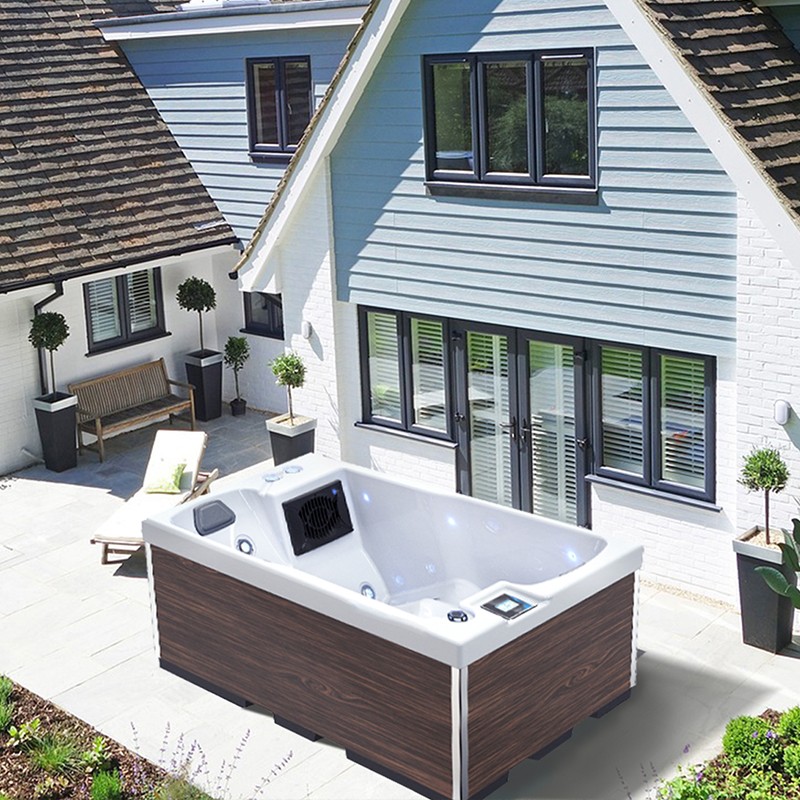
Problemas comunes del escape y sus soluciones
Al purgar el aire de la tubería del spa exterior, los usuarios pueden experimentar algunos problemas comunes. A continuación, se detallan los problemas y sus soluciones:
1. Burbujas repetidas
Si siguen apareciendo burbujas repetidamente después de vaciar el agua, es posible que el filtro de la bañera de hidromasaje exterior o la boquilla no estén bien sellados. En ese momento, revise el estado de sellado de todas las piezas de conexión y vuelva a apretar o reemplazar la junta de sellado.
2. Flujo de agua insuficiente en la boquilla
Si el flujo de agua de la boquilla sigue siendo débil después de vaciar el agua, podría deberse a una obstrucción del filtro o a una succión insuficiente de la bomba de agua. En ese momento, revise el filtro y límpielo para garantizar el correcto funcionamiento de la bomba de agua.
3. Aumento del ruido de la bomba
Si la bomba de agua sigue haciendo un ruido anormal después de vaciarse, es posible que el impulsor esté desgastado o que el interior de la bomba necesite una inspección más exhaustiva. Se recomienda contactar con profesionales en bañeras de hidromasaje para exteriores para un mantenimiento más completo.
¿Por qué debería elegir a Lovia Spa como mi proveedor de spa al aire libre?
Lovia Spa, fundada en 1989, es uno de los principales fabricantes y proveedores de bañeras de hidromasaje, jacuzzis y spas de natación para exteriores de alta calidad en China. Con una enorme capacidad de producción de más de 1200 unidades mensuales y una sólida presencia internacional, ofrecemos productos personalizados, precios competitivos y un excelente servicio posventa. Nuestros productos cuentan con las certificaciones CE, ETL, ISO9001, ROHS y otras normas del sector, lo que garantiza su durabilidad y rendimiento. Contáctenos ahora para obtener atractivas ofertas, precios bajos y promociones especiales en pedidos al por mayor.